Yaşar Selman Gültekin
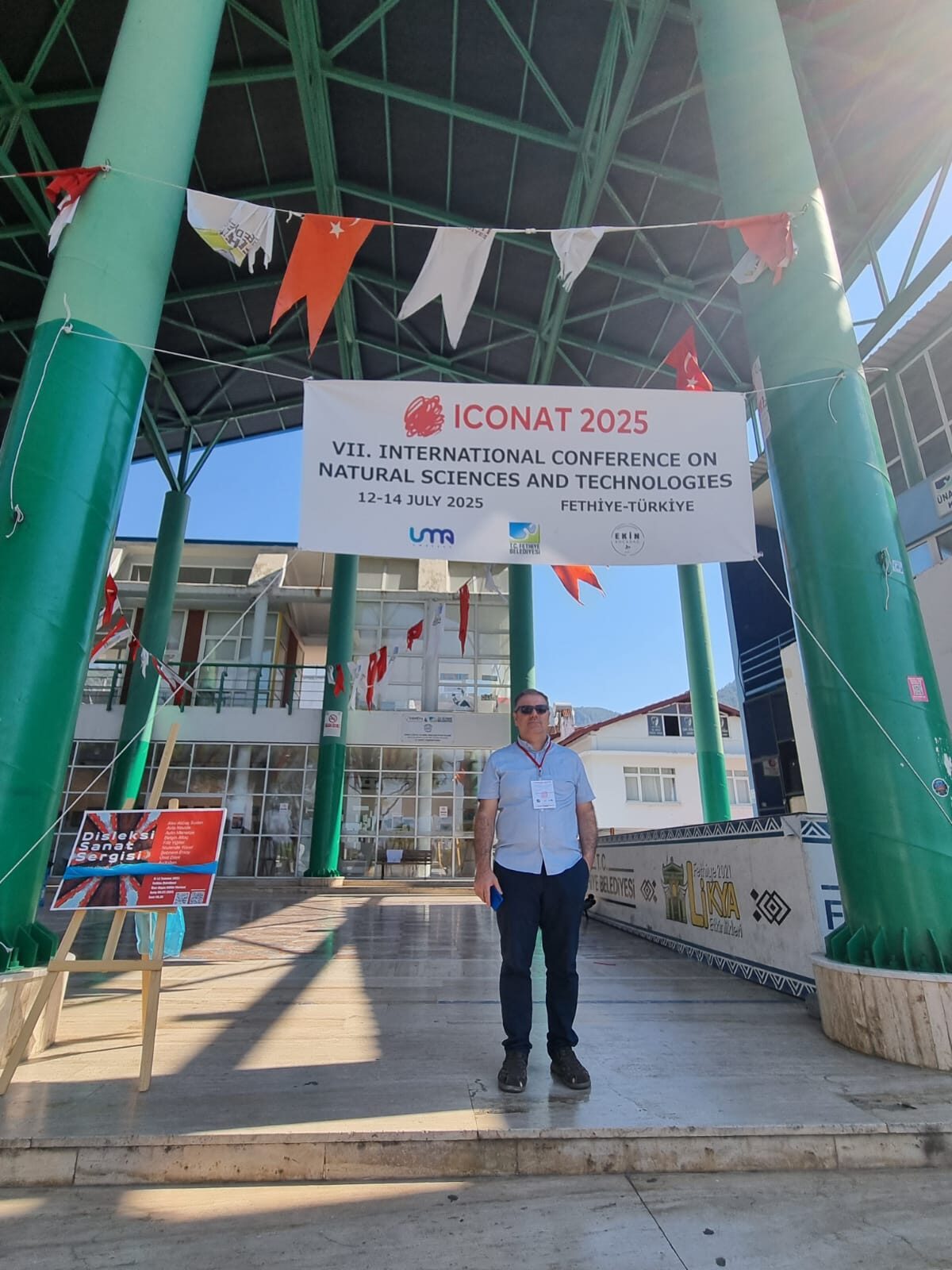
Thanks to the support of the SUSTAIN grant, I successfully participated in the 7th International Conference on Natural Sciences and Technologies (ICONAT 2025), held in Fethiye, Türkiye, from July 12 to 14, 2025. ICONAT is an established interdisciplinary platform bringing together researchers and practitioners from diverse fields such as life sciences, engineering, economics, environmental science, and social sciences. The conference attracted participants from numerous countries, including Algeria, Azerbaijan, Bulgaria, China, India, Malaysia, Morocco, Palestine, Ukraine, and the USA, offering a rich environment for international academic exchange.
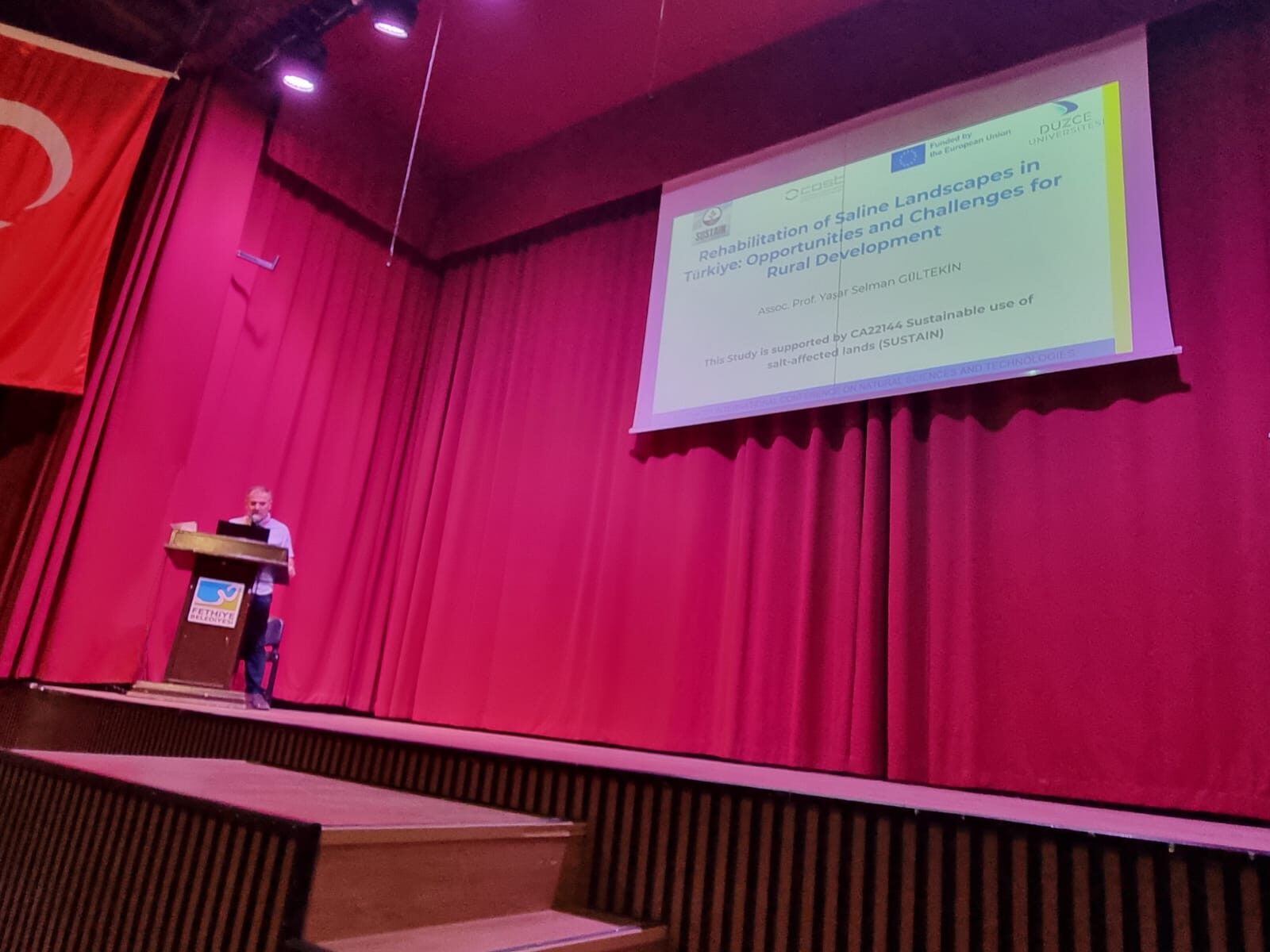
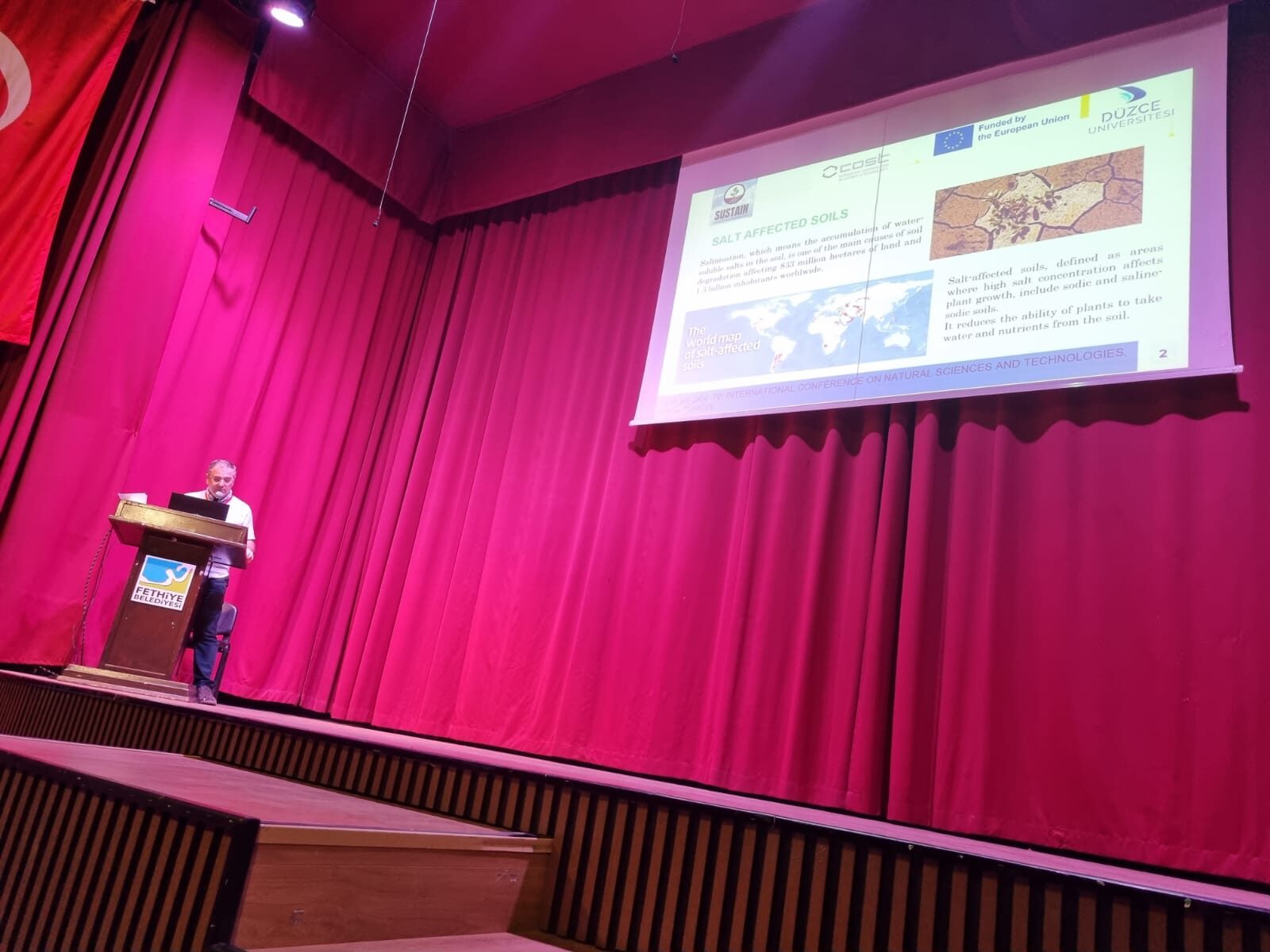
I presented my research titled “Rehabilitation of Saline Landscapes in Türkiye: Opportunities and Challenges for Rural Development” during Oral Presentation Session #24. My talk focused on the degradation of saline-affected areas in Türkiye and explored ecological rehabilitation strategies, sustainable land management practices, and their alignment with rural development policies. The session generated engaging discussions, particularly on the socio-economic benefits of land restoration and its scalability in climate-impacted rural regions.
Beyond my presentation, I attended multiple sessions related to ecology, forestry, agriculture, and sustainability, which provided valuable insights into current global research trends and methodological approaches. Keynote speeches by prominent scientists such as Prof. Dr. Ali Demirsoy and Prof. Dr. Cengiz Türe on climate vulnerability and ecosystem resilience further reinforced the interdisciplinary relevance of my work.
The conference created meaningful opportunities for networking, dialogue, and potential collaboration. I engaged with researchers working in fields such as circular economy and ecological design, with mutual interest in co-authored publications and joint research proposals. Participation also enhanced the visibility of Turkish research within the broader international scientific community.
The SUSTAIN grant made it possible to share my findings with a global audience, engage in interdisciplinary discussions, and initiate future academic collaborations that align with the goals of sustainable rural development and climate adaptation.