Christian Lorenz
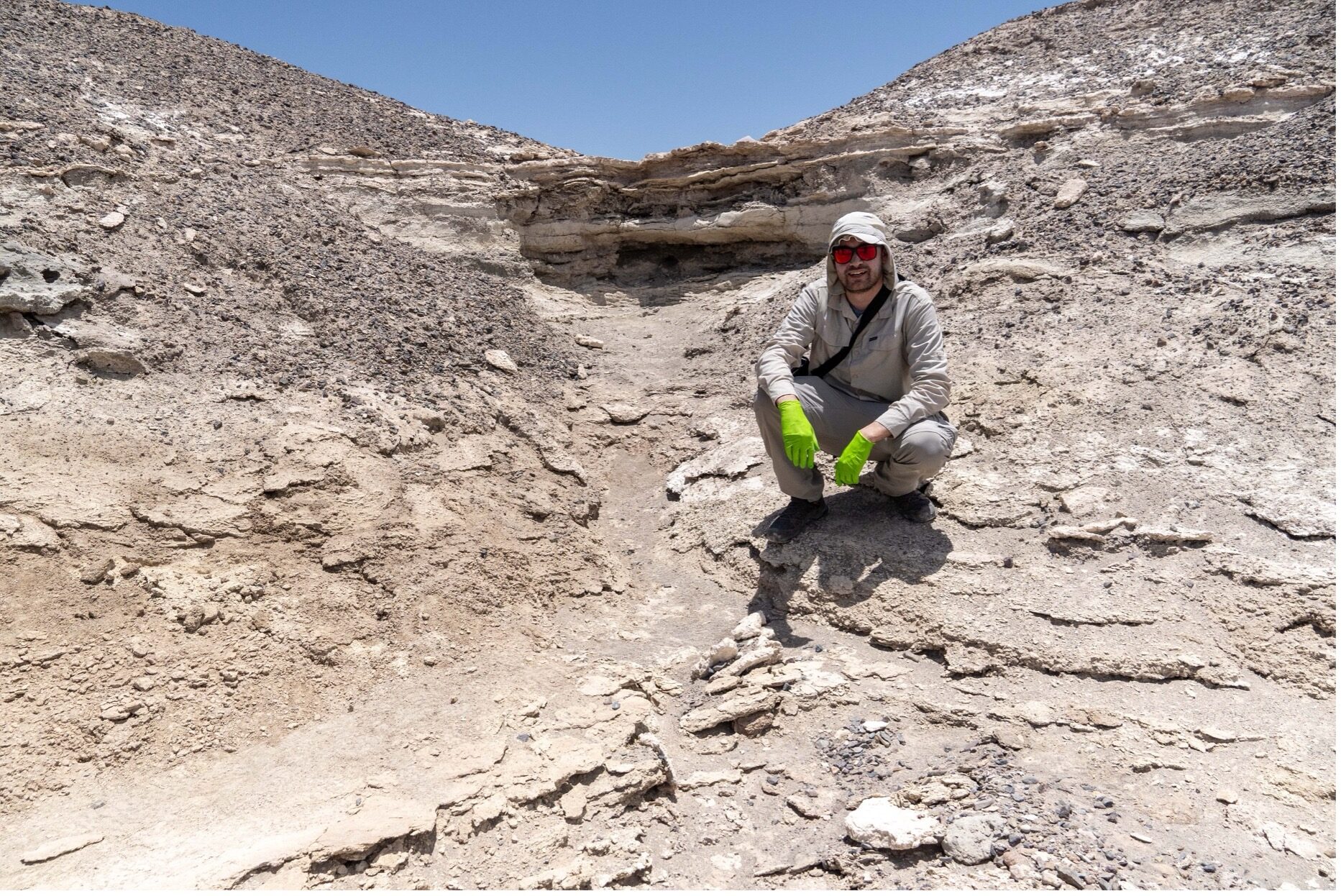
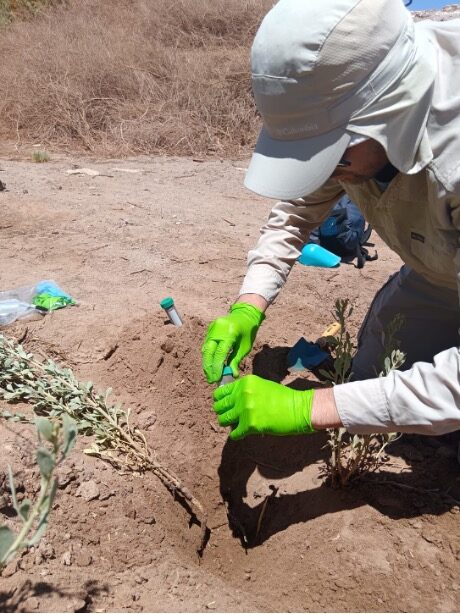
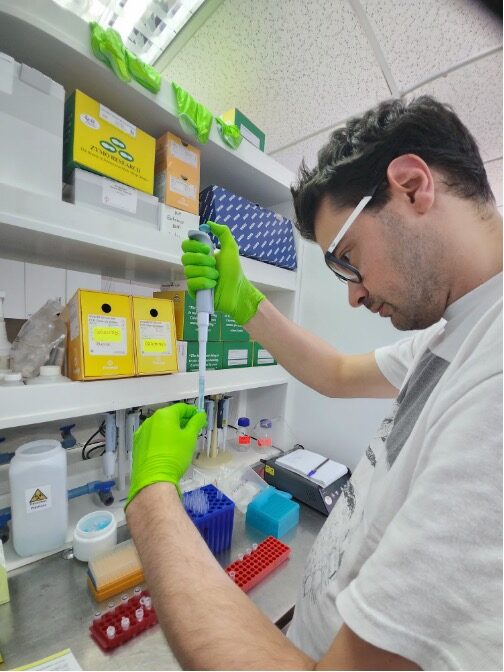
During this research mobility, activities were organized into two main work plans. The first focused on functional tests of rhizobacteria previously isolated from two extreme environments: Paposo, a coastal fog oasis in the Atacama Desert, and Isla Rey Jorge, an island in Antarctica. Paposo has a unique microclimate with daily fog, intense UV radiation, and many endemic plants adapted to recurring water scarcity. Isla Rey Jorge hosts the only two vascular plant species native to Antarctica. Rhizosphere soils were collected from four plant species (three in Paposo, one in Isla Rey Jorge), and several bacterial strains were previously isolated. During the mobility, these strains were tested for tolerance to environmental stress and plant growth-promoting (PGP) traits. Six strains were selected based on initial screenings: all tolerated osmotic stress (20% PEG), produced siderophores, showed catalase activity, and formed biofilms. Four strains grew in saline conditions (6% NaCl); auxin production was confirmed in three, and oxidase activity in another three. To assess their bio-stimulant potential, tomato seeds (cv. ACE55) were inoculated with each strain. In water agar, S3, S5, and S6 promoted the fastest and most uniform germination. Under salt stress, S3 enhanced root growth, while S1, S3, and S6 increased seedling weight. Under osmotic stress, S2, S3, and S5 promoted faster germination, and S5 and S6 improved both root length and fresh weight. The second work plan involved field sampling in two sites in northern Chile: the Rio Loa, an intermittent saline river, and María Elena, the driest place on Earth. María Elena has extreme conditions: 0–15% relative humidity, a constant UV index of 15, and surface temperatures reaching 65 °C, with no visible vegetation. From Rio Loa, rhizosphere soils were collected from three plant species (in triplicate), while bulk soil was sampled from María Elena. After culturing and isolating colonies, 19 morphologically distinct strains were characterized based on colony appearance, cell shape, and Gram staining. Functional screening revealed that all nine selected strains produced auxins and tolerated salt; eight formed biofilms and five resisted osmotic stress (5% PEG). DNA was extracted and sequenced (16S rRNA) for identification.